


Lighthouses And Lightships
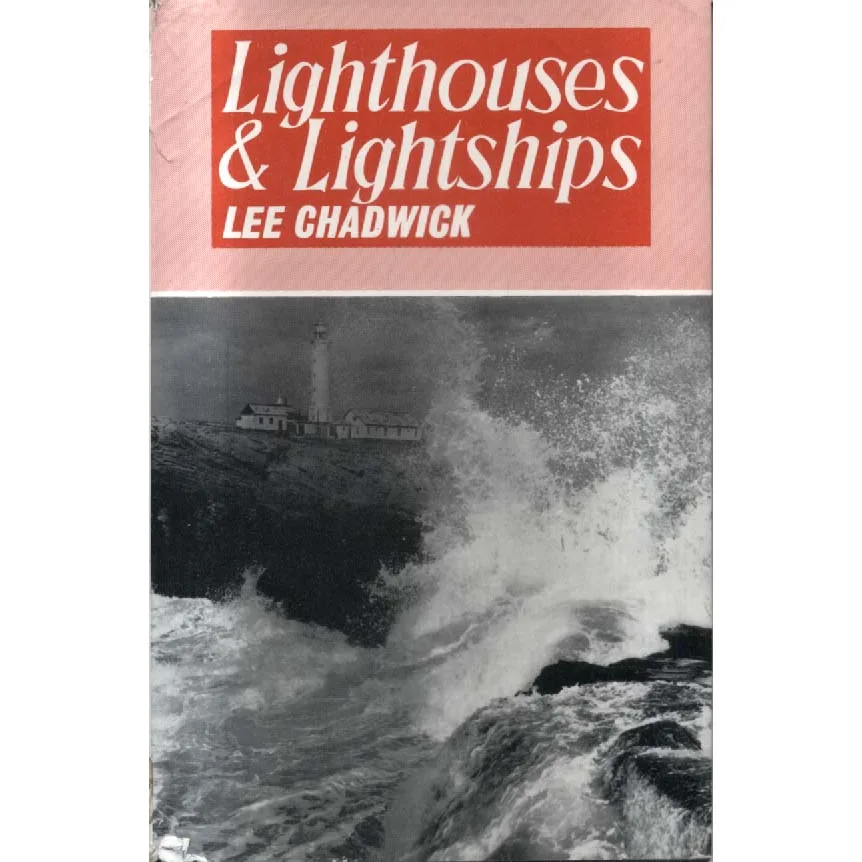
Publisher: Dennis Dobson
Format: Hardback
ISBN: 0234775513
Lighthouses and Lightships (1974) – Lee Chadwick
Dennis Dobson | ISBN: 0234775513
Condition: Good | Sold by Crappy Old Books
Lighthouses. Those magnificent towers constructed on remote headlands, treacherous rocks and windswept islands for the express purpose of informing sailors that they are approaching somewhere they would very much prefer not to be. For centuries, they have stood against the fury of the sea, offering reassurance to mariners, employment to unusually solitary individuals and endless opportunities for photographers to capture enormous waves crashing dramatically against perfectly respectable buildings.
Welcome to Lighthouses and Lightships, Lee Chadwick’s fascinating exploration of the structures, vessels and maritime traditions that have helped keep ships away from dangerous coastlines, hidden reefs and other unfortunate geographical surprises.
Before satellite navigation, sophisticated electronic charts and automated positioning systems transformed maritime travel, the lighthouse was one of the most important features of coastal navigation. Its purpose was beautifully straightforward: shine a powerful light into the darkness and hope that the approaching captain possessed sufficient intelligence to steer away from the rocks.
Naturally, achieving this apparently simple objective required extraordinary engineering ingenuity.
Lighthouses had to withstand ferocious storms, relentless saltwater corrosion and the occasional wave large enough to convince their occupants that the entire Atlantic Ocean had developed a personal grievance. Their foundations needed to remain secure, their lamps had to function reliably, and their keepers were expected to maintain everything under circumstances that would make an ordinary workplace health-and-safety inspection seem positively recreational.
Then there were the lightships, those remarkable floating alternatives deployed where constructing a permanent lighthouse was impractical or prohibitively expensive. Anchored near dangerous shoals and shipping routes, these specially equipped vessels provided vital navigational warnings while their crews endured the considerable pleasure of remaining in approximately the same position during storms that sent everybody else racing for shelter.
Imagine spending your working life aboard a ship whose principal function is never to go anywhere.
And which occasionally attempts to throw you out of bed simply because the weather has become enthusiastic.
Chadwick’s subject brings together maritime history, engineering achievement and the human experience of maintaining navigational safety in some of the most exposed locations imaginable. From the development of lighting equipment and distinctive lighthouse structures to the role of lightships in protecting commercial shipping, it is a world of ingenuity, determination and extraordinary practical achievement.
Published in 1974, this volume also captures an important period in maritime history, when traditional lighthouse keeping and manned lightships still formed part of coastal navigation, although automation and changing technology were beginning to transform the profession.
There is something particularly romantic about the lighthouse keeper’s existence, at least when viewed from a comfortable armchair. Solitude, spectacular views and the soothing sound of the sea all sound delightful until one considers the isolation, maintenance responsibilities and occasional necessity of climbing a tower during a violent winter storm.
This 1974 Dennis Dobson edition, offered in Good condition by Crappy Old Books, is an appealing acquisition for enthusiasts of maritime history, lighthouse collectors, nautical engineers and anyone fascinated by the extraordinary structures built to protect those who venture onto the world’s oceans.
A charming exploration of Britain’s great maritime traditions and the ingenious efforts made to prevent ships from becoming permanent additions to the coastline.
Because while sailors have always dreamed of discovering new lands, the sensible ones generally preferred not to discover them by accidentally sailing straight into them.
Particularly at three o’clock in the morning.
Keep browsing: See more Non-Fiction books Other books by Lee Chadwick
